
Background
Fourier transform fails with non-stationary signals because it lacks time localization. Wavelet analysis solves this by using scalable, translatable “wavelets” to achieve focus in both time and frequency domains simultaneously.
Core Theory
1. Continuous Wavelet Transform (CWT)
$W_f(a, b) = \int_{-\infty}^{\infty} f(t) \psi_{a,b}^*(t) dt$. Scale $a$ corresponds to inverse frequency, adjusting the window’s resolution adaptive to the signal’s properties.
2. Multiresolution Analysis (MRA)
Signals are decomposed into approximation parts (low frequency) and detail parts (high frequency) layer by layer using Mallat’s algorithm and filter banks.
3. Dynamic Time-Frequency Balancing
Providing narrow time windows for high frequencies and wide windows for low frequencies, matching the physical nature of natural signals.
Figure
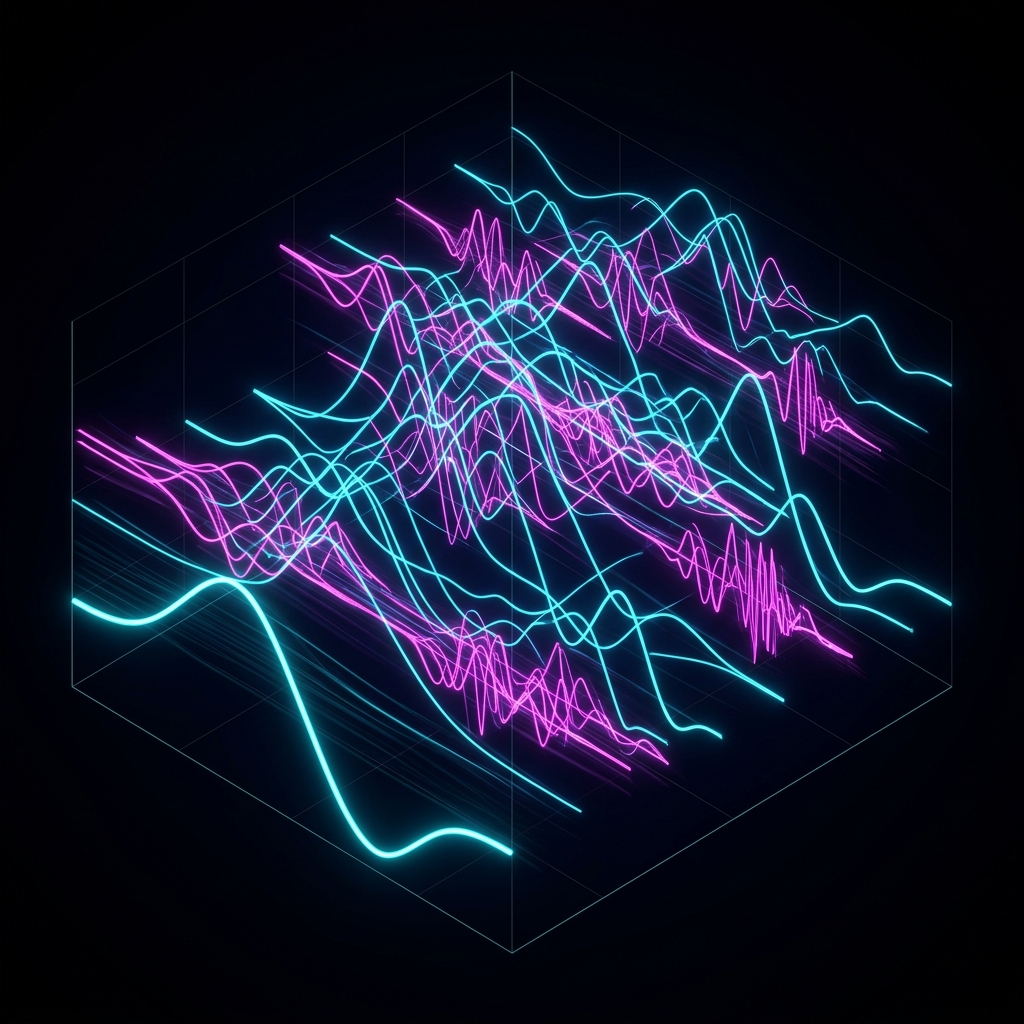 Figure 1: Time-frequency grid of multiresolution analysis showing adaptive windowing across scales.