
Background
Real physical systems in nature rarely follow a single physical law in isolation; rather, they are the result of intertwined interactions across multiple fields. From thermo-electric coupling in microchips to aero-structural coupling in wind turbine blades, and fluid-solid-biological coupling in human bones—cross-scale multi-physics modeling is a core challenge in modern engineering computation.
The primary difficulty lies in the vastly different time and space scales characteristic of different physical fields, which can lead to an explosion in the number of degrees of freedom if discretized directly.
Core Theory
1. Operator Decomposition in Multi-field Coupling
Consider a system described by fields $\mathbf{u}_1, \mathbf{u}_2, \ldots, \mathbf{u}_n$, where each field satisfies its own partial differential operator $\mathcal{L}i$, and fields interact through coupling terms $\mathcal{C}{ij}$:
$$ \mathcal{L}i(\mathbf{u}i) + \sum{j \neq i} \mathcal{C}{ij}(\mathbf{u}_j) = \mathbf{f}_i, \quad i = 1, \ldots, n $$
For thermo-structural coupling, the system for temperature $T$ and displacement $\mathbf{d}$ is written as:
$$ \rho c_p \frac{\partial T}{\partial t} - \nabla \cdot (\kappa \nabla T) = -T_0 \alpha \frac{\partial (\nabla \cdot \mathbf{d})}{\partial t} $$
2. Partitioned Approach
The coupling problem is split into several single-field sub-problems solved alternately, with coupling information passed through interface conditions. Convergence is often accelerated using the Aitken dynamic relaxation factor.
3. Homogenization Theory
For composite materials with periodic microstructures, macro-scale $\mathbf{x}$ and micro-scale $\mathbf{y} = \mathbf{x}/\varepsilon$ are separated through two-scale asymptotic expansion.
Figure
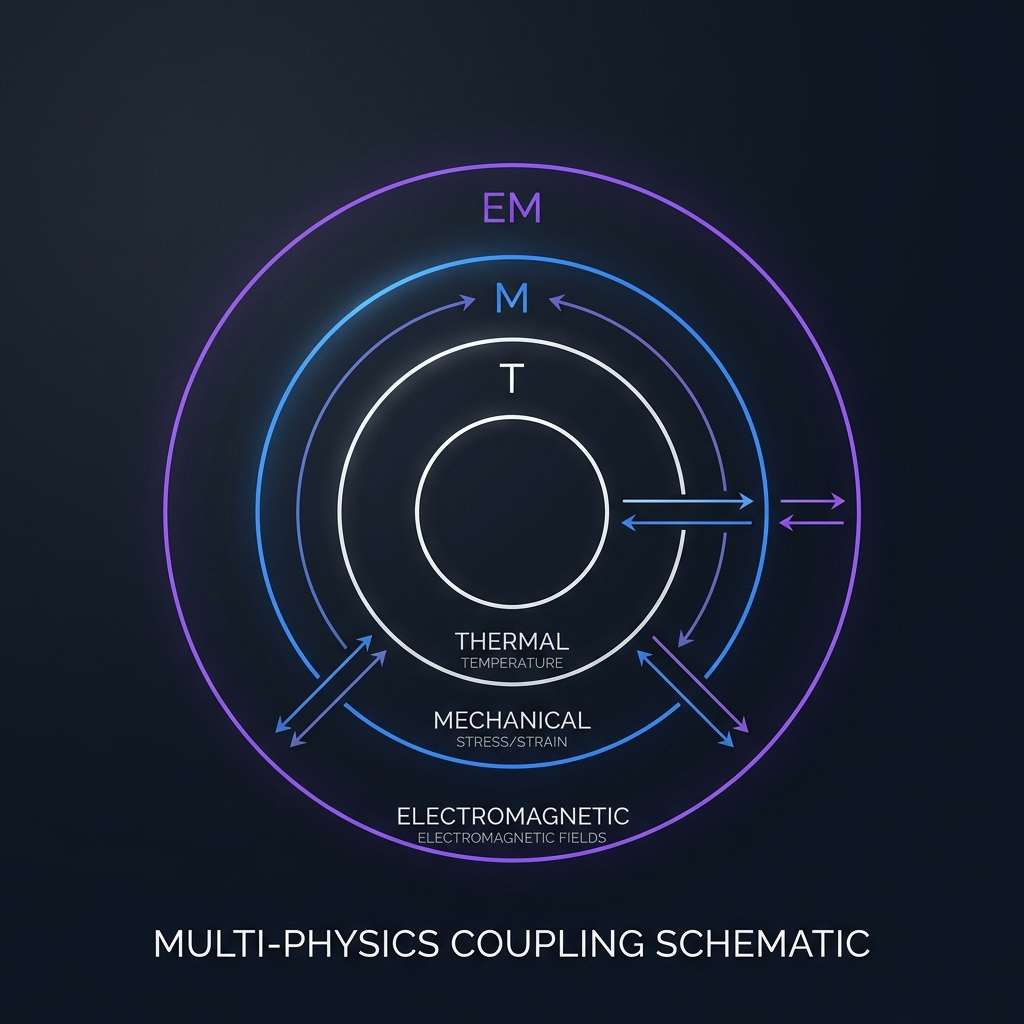
Figure 1: Schematic of multi-layer energy transfer across quantum, meso, and macro fluid scales.
Frontiers & Challenges
- Strong Non-linear Coupling: Convergence issues in partitioned methods.
- Reduced Order Modeling (ROM): Real-time simulation via POD-Galerkin or Machine Learning.
- Uncertainty Quantification (UQ): Propagation of randomness through PCE or Monte Carlo.