Aura 8-Level Model Routing: The Golden Balance of Performance and Cost
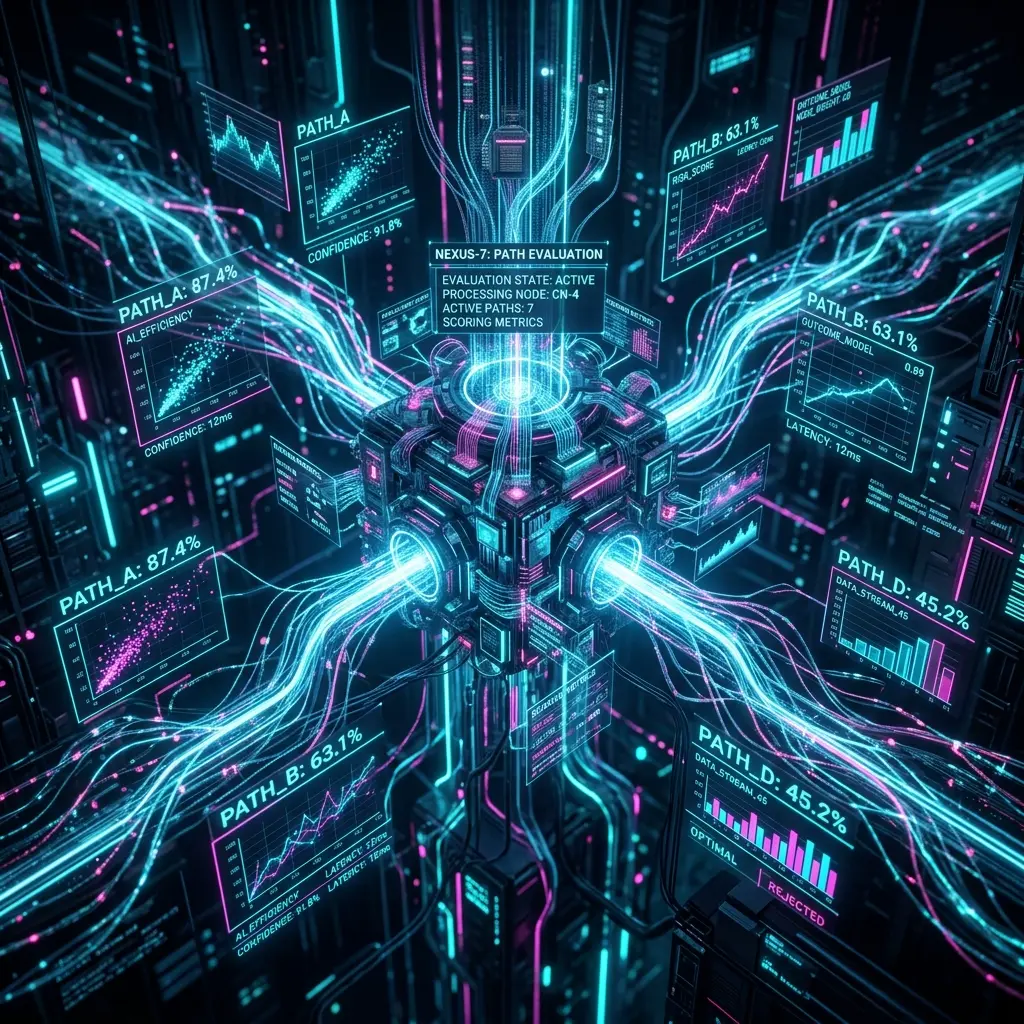
Letting an expensive flagship-level LLM perform a simple task like “converting text to JSON format” is an engineering failure. Aura possesses a sophisticated Model Routing Engine (Model Router) that pushes compute scheduling to the extreme.
1. 8-Level Performance Tier: Gradientization of Compute
We define the Model dimension (8-bit) in 3D addressing as 256 fine-grained gradients, but logically, it is primarily divided into 8 core levels:
- L1 - L3 (Edge-Native): Micro-models (1B - 7B) running locally. Responsible for low-value, high-frequency tasks such as high-speed format conversion and keyword extraction.
- L4 - L6 (Mid-Tier): Balanced models. Responsible for intermediate processes requiring high logical coherence.
- L7 - L8 (Summit-Tier): Flagship remote models. Responsible for complex cross-step reasoning, architectural decisions, and final quality audit.
2. Multi-Dimensional Scoring Engine: The Art of Decision Making
The router’s decisions are not hard-coded but are based on a Multi-Objective Optimization Function:
2.1 Pareto Optimal Selection
We maintain a real-time scoring matrix for each available model:
- Latency: P99 response curves.
- Accuracy: The model’s historical success rate under specific
Action. - Cost: USD amount per million token consumption.
- Reliability: API timeout frequency.
3. Multi-Armed Bandit (MAB) Algorithm: Dynamic Exploration
To prevent the system from always using only a certain model, the router introduces the Multi-Armed Bandit algorithm. It periodically allocates tasks to non-optimal models in small proportions for “stress testing.” If it discovers a model has recently improved in performance and decreased in price, the system automatically migrates the weights.
4. Graceful Degradation
If a flagship model encounters service unavailability, the routing engine instantly initiates Forced Degradation. Meta dynamically rewrites 3D pointers, smoothly migrating tasks to local backup models. Although reasoning depth may slightly decrease, it ensures the task stream never disconnects.
5. Conclusion
Model routing is Aura’s “Cost Command Center.” It not only saves more than 70% of API fees but also achieves system-level high-performance operation through reasonable load balancing. In Aura’s view, there is no “best” model, only the most “suitable” model at a specific coordinate.
Produced by Dark Lattice Architecture Lab.